Skip to content

Mobile veterinary CT · New Jersey & surrounding regions

A CT scanner that drives to your veterinary practice.

Rover CT brings gold-standard 3D CT scanning for dogs and cats directly to your hospital, for a half day or a full day. Your team anesthetizes the patient, we scan in about ten minutes, and a board-certified veterinary radiologist reads the images. No scanner to buy, no lease, no sending your client somewhere else.

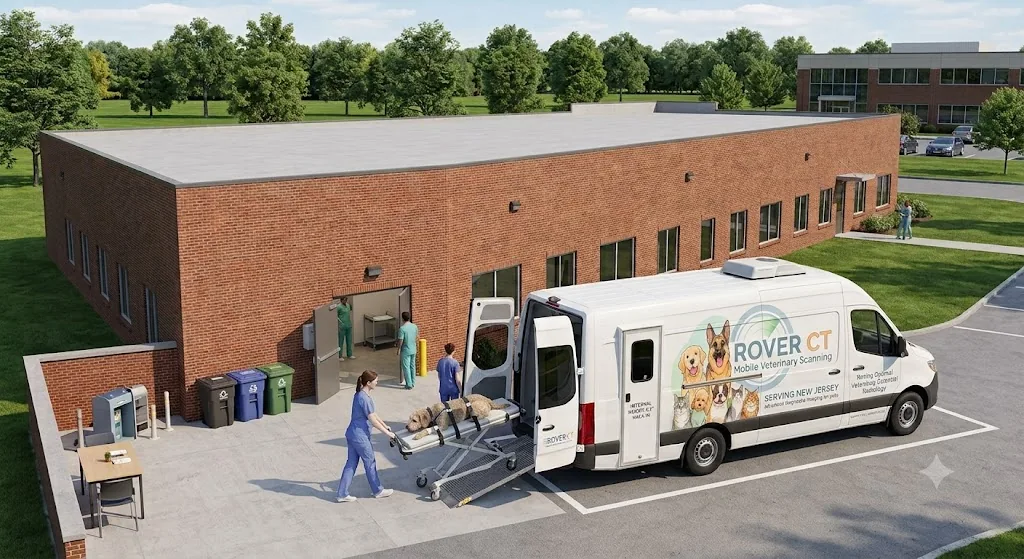
The Rover CT van, branded for mobile veterinary scanning, parked outside a veterinary practice
Concept render — AI-generated. To be replaced with photography once the van is delivered.
~10 min
to scan a patient, at your practice
Half or full day
the van is parked with you
3D CT
read by a veterinary radiologist

What Rover CT is

CT scanning built specifically for veterinary practices.

Roaming Optimized Veterinary Essential Radiology

Gold-standard 3D CT is normally available in only a small percentage of veterinary emergency hospitals and radiology referral clinics. Rover CT puts it in your parking lot — anywhere, any time.

It lets your practice offer advanced CT imaging without buying or maintaining a CT scanner. There is no equipment cost to the practice, no lease, and no minimum number of scans. You are selling a half day you already have.

Roughly three quarters of what we scan are dogs and the rest are cats.

The equipment

Claris V 3D CT

The next dimension in 3D veterinary imaging.

1,000-slice-equivalent 3D CT renderings, produced on board and delivered electronically — not a mobile compromise, the same standard of imaging your referral center is using.

The Rover CT van parked at a veterinary practice with the rear ramp down and a dog being wheeled aboard
Concept render — AI-generated. To be replaced with photography once the van is delivered.
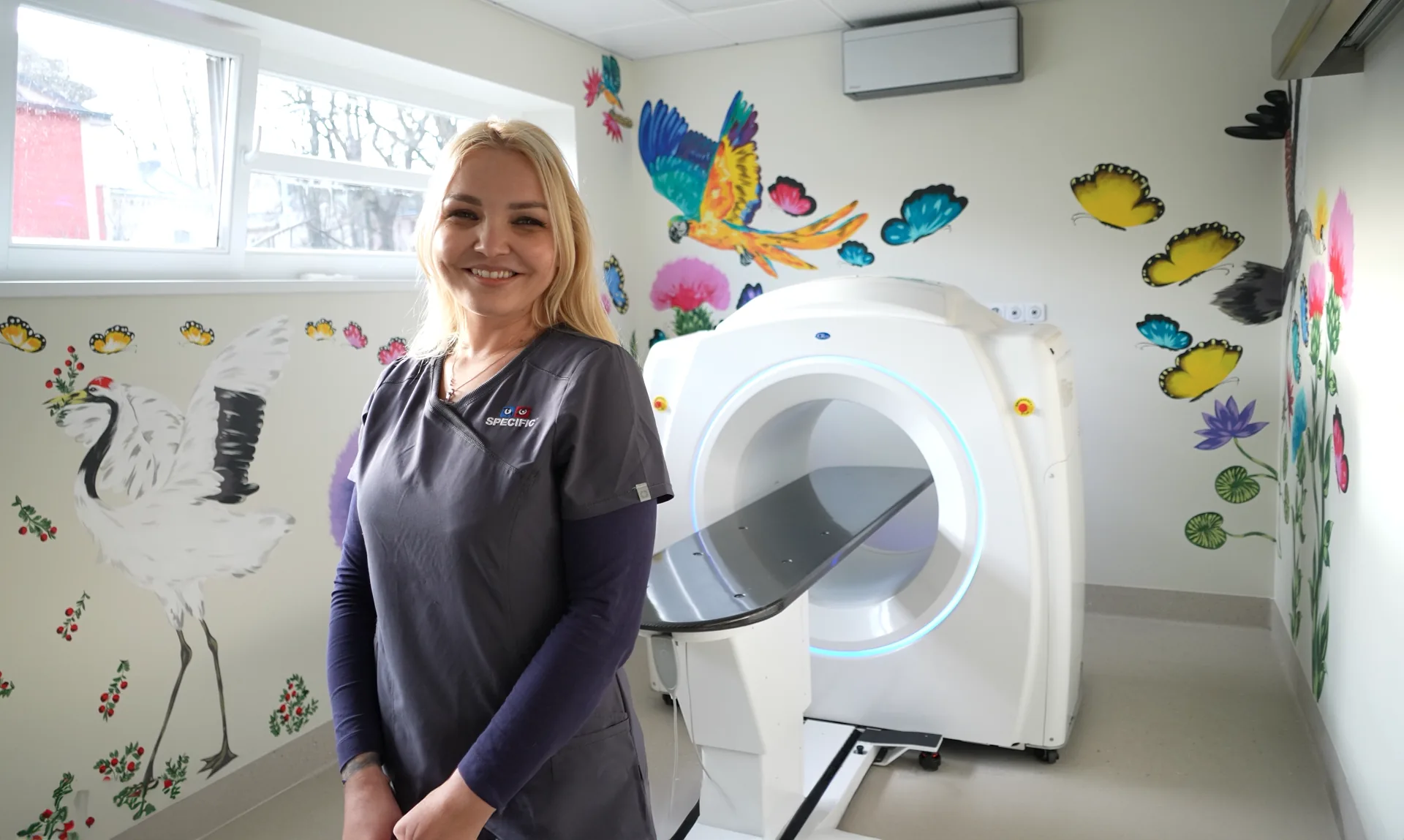
  • A sedated dog positioned on the scanner table at the mouth of the CT bore
  • A veterinary technician positioning a hawk on the scanner table
  • A technician preparing a patient at the scanner inside the mobile unit

See what you get back

A 3D reconstruction you can turn, not a flat plate.

This is the part that changes the conversation with an owner. The scan rotates, and the finding is visible without a specialist in the room to explain it.

Whole-body reconstruction
Thorax and abdomen
Skull and spine
Soft tissue detail

These play on their own. Hover over one to stop it and scrub through the rotation.

How a visit works

You group your cases. We park outside. Nobody travels.

A number of patients are scheduled together for the session when the Rover CT vehicle is at your practice.

  1. 1

    Book a session

    Pick a half day or full day and add the patients you want scanned. Cases can be added right up to the day before.

  2. 2

    We arrive

    The van parks at your hospital at the agreed time. Nothing needs installing and nothing needs moving.

  3. 3

    You anesthetize

    Your team anesthetizes the patient and brings them out to the truck in an animal trough.

  4. 4

    We scan — about 10 minutes

    The patient is scanned on board, then returned straight to your hospital for recovery.

  5. 5

    A radiologist reads it

    Images go electronically to a board-certified veterinary radiologist, and the report comes back to you electronically.

Why practices use it

The scans you are already ordering, actually happening.

50–75%

Fewer referrals that never happen

Written prescriptions for CTs currently drop off at a rate of 50–75% — the client is referred out and simply never goes. When the scanner comes to you, the study gets done.

30 days

Dramatically faster results

Turnaround from order to results in hand is currently around 30 days on average. Scanning on site and reading electronically cuts that sharply.

Direct

You bill the pet owner

Rover charges the practice for the CT service. The practice charges the pet owner directly, which keeps the whole evaluation in one place.

Yours

You keep the study

The study information stays under the vet's control — for future referral, for comparison against later imaging, and for sharing with other practices or specialty referrals.

Indications for CT referral: a diagram of a dog labelled with what a CT scan is used to diagnose, including cancer staging, surgical planning, 3D models, abdominal disorders, and joint and elbow disease

For practices already ordering CTs and referring them out with no financial gain, this adds meaningful income. See what a scan is worth to your practice.

Rover CT in practice

A scanner, a parking space, and a very ordinary Tuesday.

Hover to stop the strip, drag it either way, or click any image to see it full size.

Roughly three quarters of what we scan are dogs and the rest are cats.

Book Rover CT for your practice.

Registering takes a minute and costs nothing. You choose how often we come — weekly, every two weeks, or monthly — and you fill each session yourself.

Register your practice